New York College of Podiatric Medicine Doctorate in Health Professions
Health Professions is a program of study at New York College of Podiatric Medicine. The school offers a doctor’s degree in the area. We’ve gathered data and other essential information about the doctor’s degree program in health professions, such as diversity of students, how many students graduated in recent times, and more.
If there’s something special you’re looking for, you can use one of the links below to find it:
Featured schools near , edit
How Much Does a Doctorate in Health Professions from The First Institute of Podiatry Cost?
Does The First Institute of Podiatry Offer an Online Doctorate in Health Professions?
Online degrees for the The First Institute of Podiatry health professions doctor’s degree program are not available at this time. To see if the school offers distance learning options in other areas, visit the The First Institute of Podiatry Online Learning page.
The First Institute of Podiatry Doctorate Student Diversity for Health Professions
Male-to-Female Ratio
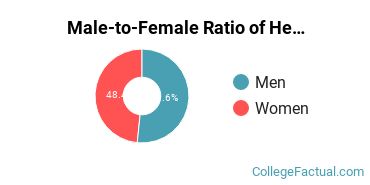
Of the students who received their doctor’s degree in health professions in 2019-2020, 42.4% of them were women. This is less than the nationwide number of 60.6%.
Racial-Ethnic Diversity
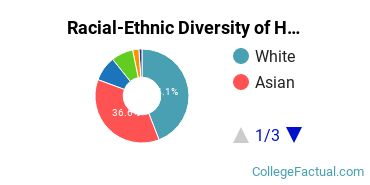
Racial-ethnic minority graduates* made up 43.5% of the health professions doctor’s degrees at The First Institute of Podiatry in 2019-2020. This is higher than the nationwide number of 35%.
| Race/Ethnicity | Number of Students |
|---|---|
| Asian | 30 |
| Black or African American | 4 |
| Hispanic or Latino | 3 |
| Native American or Alaska Native | 0 |
| Native Hawaiian or Pacific Islander | 0 |
| White | 46 |
| International Students | 2 |
| Other Races/Ethnicities | 0 |
Doctorate in Health Professions Focus Areas at The First Institute of Podiatry
Health Professions students may decide to major in one of the following focus areas.
| Focus Area | Annual Graduates |
|---|---|
| Medicine | 85 |
References
*The racial-ethnic minorities count is calculated by taking the total number of students and subtracting white students, international students, and students whose race/ethnicity was unknown. This number is then divided by the total number of students at the school to obtain the racial-ethnic minorities percentage.
More about our data sources and methodologies.
Featured Schools

College Factual provides higher-education, college and university, degree, program, career, salary, and other helpful information to students, faculty, institutions, and other internet audiences. Presented information and data are subject to change. Inclusion on this website does not imply or represent a direct relationship with the company, school, or brand. Information, though believed correct at time of publication, may not be correct, and no warranty is provided. Contact the schools to verify any information before relying on it. Financial aid may be available for those who qualify. The displayed options may include sponsored or recommended results, not necessarily based on your preferences.
© College Factual – All Rights Reserved.