 by our College Data Analytics Team
Below are the key facts about this program at Colby College. It is offered at the Bachelor’s level. Jump to any of the following sections:
Here is each degree level granted in child development & psychology at Colby College, along with how many graduates complete each level annually.
| Degree Level | Annual Graduates |
|---|---|
| Bachelor’s | 18 |
In the most recent year for which we have data, Colby College conferred 18 bachelor’s degrees in child development & psychology.
Colby College is not yet ranked for child development & psychology at the bachelor’s level.
The full-time undergraduate tuition and fees are shown below.
| In State | Out of State | |
|---|---|---|
| Tuition | $58,640 | $66,660 |
| Fees | $2,940 | $2,940 |
Learn more about Colby College tuition and fees.
For the most recent academic year available, 17% of child development & psychology bachelor’s degrees went to men and 83% went to women.
 The majority of child development & psychology bachelor’s degree graduates at Colby College were White. Approximately 50% of graduates fell into this category.
The following table and chart show the ethnic background for students who recently graduated from Colby College with a bachelor’s in child development & psychology.
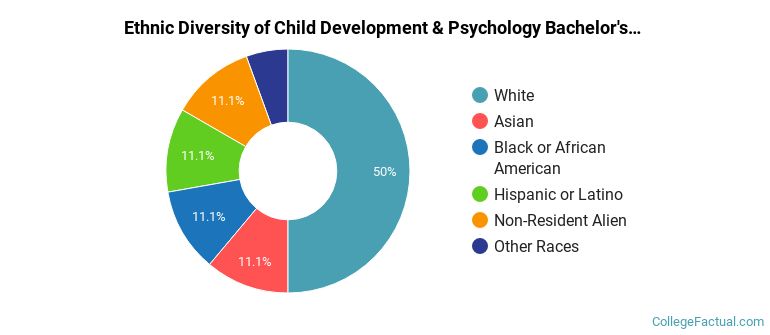
| Ethnic Background | Number of Students |
|---|---|
| Asian | 2 |
| Black or African American | 2 |
| Hispanic or Latino | 2 |
| White | 9 |
| Non-Resident Aliens | 2 |
| Other Races | 1 |
Colby College conferred 18 bachelor’s completions in behavioral neuroscience in the most recent reporting year — 83% to women and 17% to men. The most common background among these graduates was White (50%).