 by our College Data Analytics Team
The New England Conservatory of Music total enrollment is approximately 701 students. 374 are undergraduates and 270 are graduate students.
Male/Female Breakdown of Undergraduates
The full-time The New England Conservatory of Music undergraduate population is made up of 48% women, and 52% men.
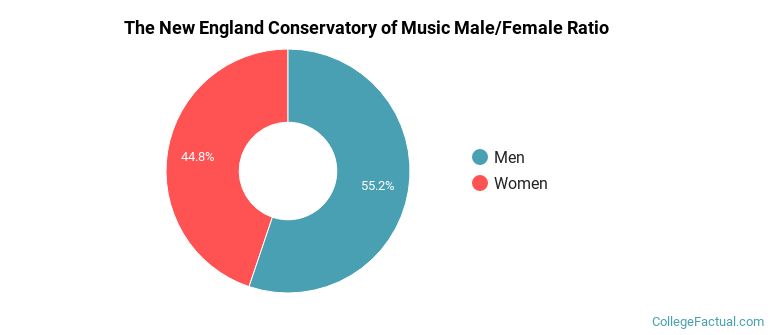
For the gender breakdown for all students, go here.
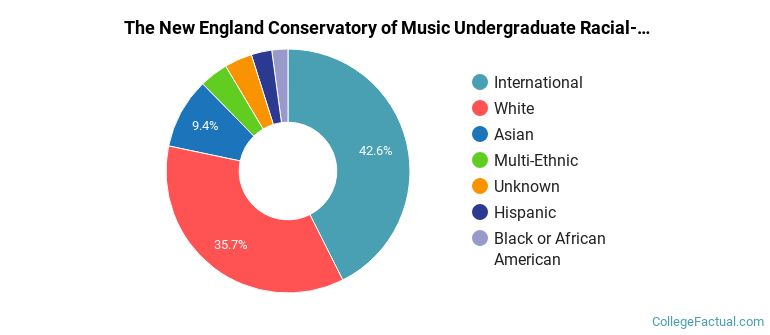
The New England Conservatory of Music Racial/Ethnic Breakdown of Undergraduates
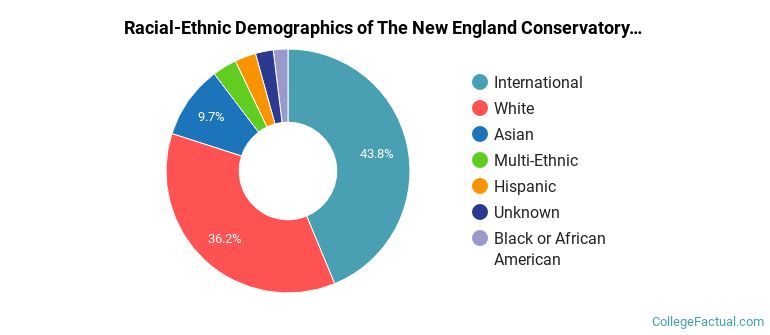
| Race/Ethnicity | Number |
|---|---|
| International | 171 |
| White | 127 |
| Asian | 41 |
| Multi-Ethnic | 18 |
| Hispanic | 9 |
| Unknown | 5 |
| Black or African American | 3 |
| Native Hawaiian or Pacific Islander | 0 |
See racial/ethnic breakdown for all students.
Male/Female Breakdown of Graduate Students
About 49% of full-time grad students are women, and 51% men.
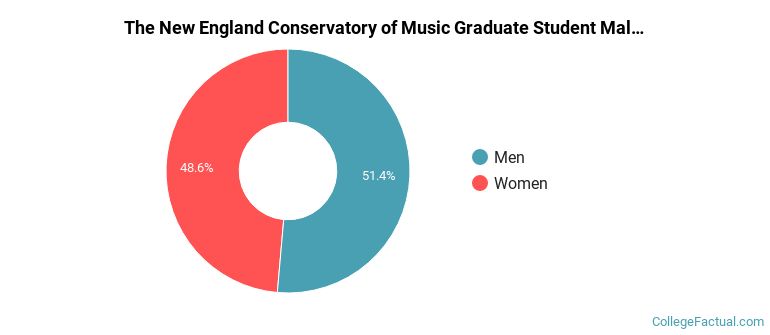
For the gender breakdown for all students, go here.
The New England Conservatory of Music Racial-Ethnic Breakdown of Graduate Students
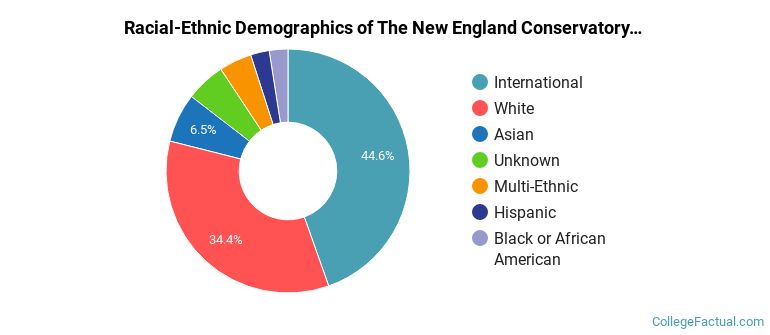
| Race/Ethnicity | Number |
|---|---|
| International | 112 |
| White | 89 |
| Asian | 27 |
| Multi-Ethnic | 13 |
| Black or African American | 10 |
| Hispanic | 9 |
| Unknown | 9 |
| Native Hawaiian or Pacific Islander | 0 |
See racial/ethnic breakdown for all students.
| Race/Ethnicity | Number |
|---|---|
| International | 299 |
| White | 237 |
| Asian | 79 |
| Multi-Ethnic | 37 |
| Hispanic | 18 |
| Unknown | 16 |
| Black or African American | 14 |
| Native Hawaiian or Pacific Islander | 0 |
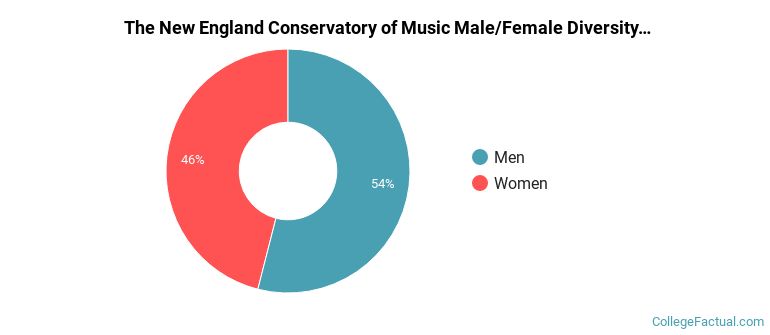
There are approximately 330 female students and 371 male students at The New England Conservatory of Music.
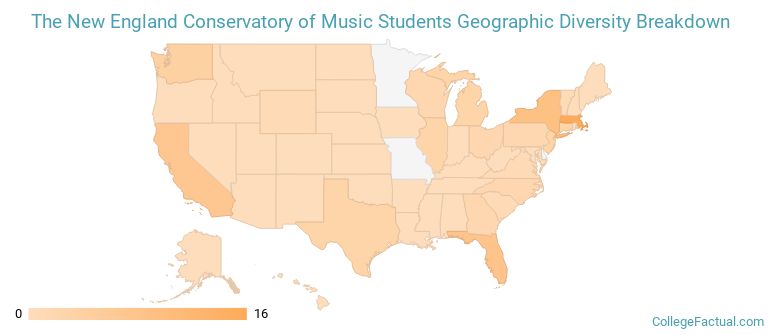
The New England Conservatory of Music ranks 197 out of 2,183 when it comes to geographic diversity.
77.03% of The New England Conservatory of Music students come from out of state, and 39.34% come from out of the country.
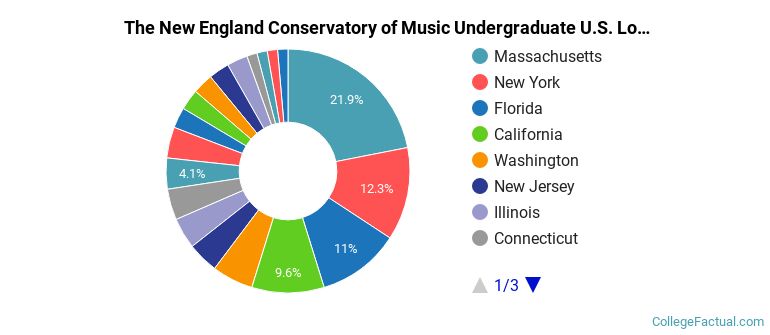
The undergraduate student body is split among 19 states (may include Washington D.C.). Click on the map for more detail.
| State | Amount |
|---|---|
| Massachusetts | 16 |
| New York | 9 |
| Florida | 8 |
| California | 7 |
| Washington | 4 |
Students from 43 countries are represented at this school, with the majority of the international students coming from China, South Korea, and Taiwan.
Learn more about international students at The New England Conservatory of Music.
A traditional college student is defined as being between the ages of 18-21. At The New England Conservatory of Music, 43.48% of students fall into that category, compared to the national average of 60%.
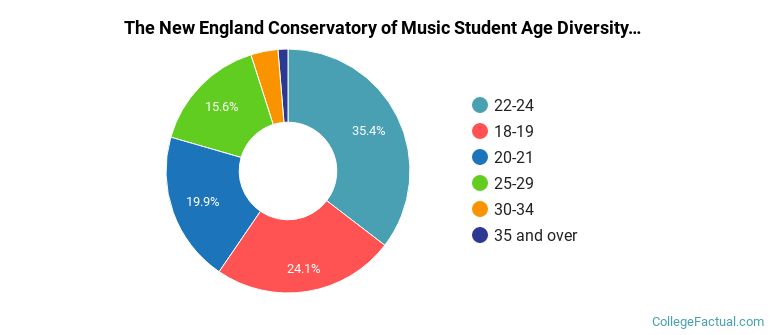
| Student Age Group | Amount |
|---|---|
| 22-24 | 295 |
| 18-19 | 201 |
| 20-21 | 166 |
| 25-29 | 130 |
| 30-34 | 30 |
| 35 and over | 11 |
| Under 18 | 0 |
Footnotes
*The racial-ethnic minorities count is calculated by taking the total number of students and subtracting white students, international students, and students whose race/ethnicity was unknown. This number is then divided by the total number of students at the school to obtain the racial-ethnic minorities percentage.
References
Department of Homeland Security Citizenship and Immigration Services
Image Credit: By Cryptic C62 under License