Find out more about how Azusa Pacific University College Graduate School ranks, how diverse it is, what graduate degree programs are offered, and other essential facts below. Click on any of the following links to jump to that section on this page.
Azusa Pacific University College Graduate School Rankings
Azusa Pacific University College is not one of the schools listed in our 2024 overall quality rankings. The usual reason for this is that we did not have enough data to make an accurate analysis of the school.
Azusa Pacific University College Graduate Student Diversity
290Graduate Students
76.2%Women
76.2%Racial-Ethnic Minorities*
During the most recent year for which data is available, 290 graduate students attended Azusa Pacific University College. Since diversity is such an important part of the grad school experience, College Factual looked deeper at the demographics of these students. Here is what we found.
Azusa Pacific’s University College Graduate Student Male-Female Ratio
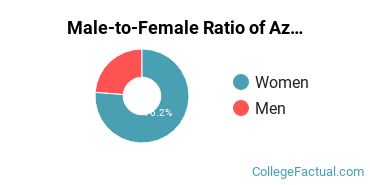
The total graduate student population at Azusa Pacific's University College is made up of 76.2% women and 23.8% men. Note that these percentages may differ for certain degree programs.
Azusa Pacific’s University College Graduate Student Racial-Ethnic Diversity
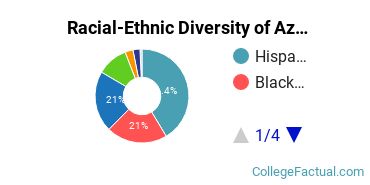
About 76.2% of the graduate students who attend Azusa Pacific's University College are from a racial-ethnic minority group*. The chart below shows the breakdown of graduate student demographics at the school. You can click on it for a more detailed view.
Azusa Pacific’s University College Graduate School Cost of Attendance
$10,800Avg Tuition & Fees (In-State)
Part-time graduate students at Azusa Pacific University College pay $600 per credit hour to attend the school. In-state students receive no discount.
The average graduate full-time tuition and fees is shown in the table below.
In-State
Out-of-State
Tuition
$10,800
$10,800
Location of Azusa Pacific University College Graduate School
Azusa Pacific University College is a private not-for-profit institution located in San Dimas, California. San Dimas is considered a suburb and offers tranquility and safety near the excitement of a city center.
*The racial-ethnic minorities count is calculated by taking the total number of students and subtracting white students, international students, and students whose race/ethnicity was unknown. This number is then divided by the total number of students at the school to obtain the racial-ethnic minorities percentage.
 by our College Data Analytics Team