 by our College Data Analytics Team
The total graduate student population at Strayer University - South Carolina is made up of 82.4% women and 17.6% men. Note that these percentages may differ for certain degree programs.

Of all the graduate students at Strayer University - South Carolina, around 89.0% belong to a racial-ethnic minority group. For more details on graduate school diversity at the school, check out the chart below. If you click on it, you'll be taken to a page with more details.

The average tuition and fees for graduate students is shown below.
| In-State | Out-of-State | |
|---|---|---|
| Tuition | $14,940 | $14,940 |
| Fees | $195 | $195 |
The average early-career salary for master's degree recipients from Strayer University - South Carolina is $55,502. Unfortunately for those graduates, that figure is about 5% lower than the national average of $58,425.

Get more details about the location of Strayer University - South Carolina.
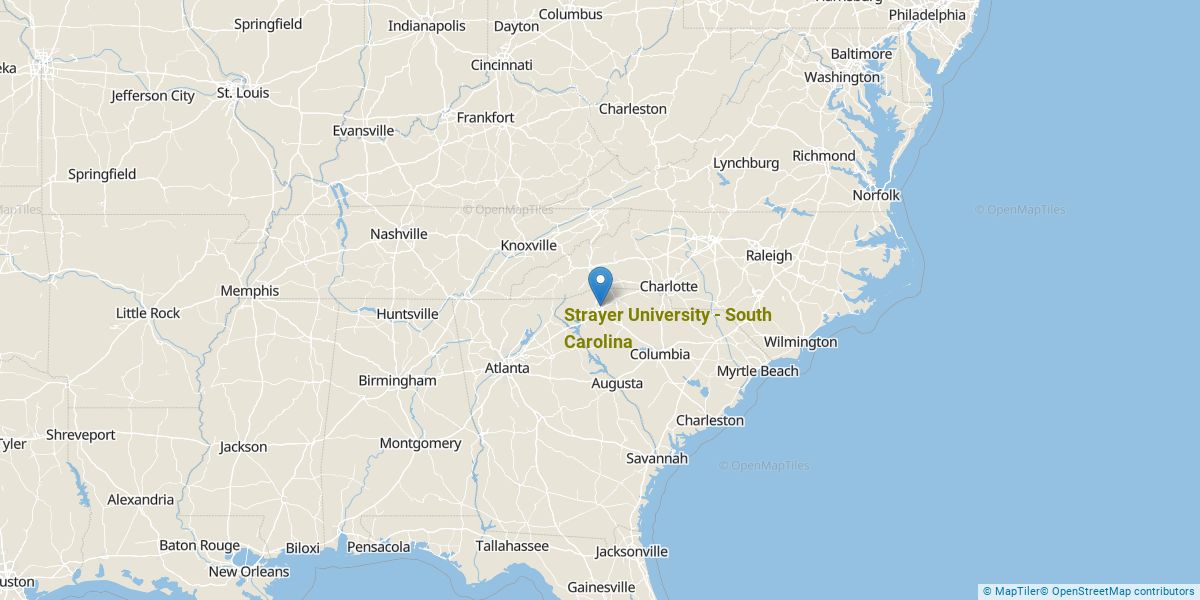
Contact details for Strayer University - South Carolina are given below.
| Contact Details | |
|---|---|
| Address: | 777 Lowndes Hill Road, Building 3, Ste 300, Greenville, SC 29607 |
| Phone: | 877-445-7180 |
| Website: | www.strayer.edu/campus-locations/south-carolina/greenville |
| Facebook: | https://www.facebook.com/StrayerUniversity |
| Twitter: | http://www.twitter.com/strayeru |
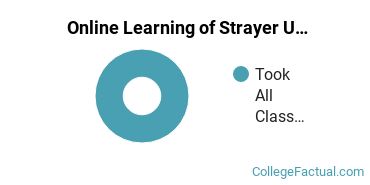
In 2020-2021, 100.0% of the graduate students at Strayer University - South Carolina took all of their classes online.
The only degree programs listed here are those in which master’s degrees were awarded in 2020-2021.
| Master’s Degree Program | Annual Graduates |
|---|---|
| Accounting | 7 |
| Business Administration & Management | 35 |
| Educational Administration | 6 |
| Health & Medical Administrative Services | 13 |
| Human Resource Management | 21 |
| Information Science | 1 |
| Information Technology | 3 |
| Public Administration | 9 |
Footnotes
*The racial-ethnic minorities count is calculated by taking the total number of students and subtracting white students, international students, and students whose race/ethnicity was unknown. This number is then divided by the total number of students at the school to obtain the racial-ethnic minorities percentage.
References
More about our data sources and methodologies.