 by our College Data Analytics Team
Social Work is a concentration offered under the social work major at Western Michigan University. Here, you’ll find out more about the major master’s degree program in social work, including such details as the number of graduates, diversity of students, and more.
If there’s something special you’re looking for, you can use one of the links below to find it:
During the 2019-2020 academic year, part-time graduate students at WMU paid an average of $1,268 per credit hour if they came to the school from out-of-state. In-state students paid a discounted rate of $682 per credit hour. The average full-time tuition and fees for graduate students are shown in the table below.
| In State | Out of State | |
|---|---|---|
| Tuition | $16,360 | $30,432 |
| Fees | $923 | $923 |
Online degrees for the WMU social work master’s degree program are not available at this time. To see if the school offers distance learning options in other areas, visit the WMU Online Learning page.
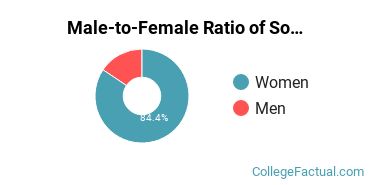
Women made up around 79.6% of the social work students who took home a master’s degree in 2019-2020. This is less than the nationwide number of 87.2%.
Of those graduates who received a master’s degree in social work at WMU in 2019-2020, 19.5% were racial-ethnic minorities*. This is lower than the nationwide number of 42%.
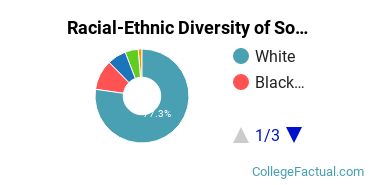
| Race/Ethnicity | Number of Students |
|---|---|
| Asian | 0 |
| Black or African American | 15 |
| Hispanic or Latino | 4 |
| Native American or Alaska Native | 0 |
| Native Hawaiian or Pacific Islander | 0 |
| White | 89 |
| International Students | 2 |
| Other Races/Ethnicities | 3 |
*The racial-ethnic minorities count is calculated by taking the total number of students and subtracting white students, international students, and students whose race/ethnicity was unknown. This number is then divided by the total number of students at the school to obtain the racial-ethnic minorities percentage.
More about our data sources and methodologies.