Find out more about how Central Christian College of the Bible Graduate School ranks, how diverse it is, what graduate degree programs are offered, and other essential facts below. You can jump to any section of this page using the following list.
Central Christian College of the Bible Graduate School Rankings
Our 2024 overall quality rankings do not include Central Christian College of the Bible. This is usually a sign that we did not have enough data to compare the school to others on our list.
Central Christian College of the Bible Graduate Student Diversity
13Graduate Students
During the most recent year for which data is available, 13 graduate students attended Central Christian College of the Bible. In order to come up with a feel for how diverse the school is, College Factual analyzed the demographics of these students. Keep reading to learn more.
Central Christian College of the Bible Graduate Student Male-Female Ratio
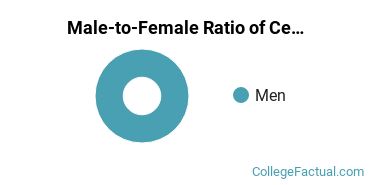
The graduate student population at Central Christian College of the Bible is made up entirely of men.
Central Christian College of the Bible Graduate Student Racial-Ethnic Diversity
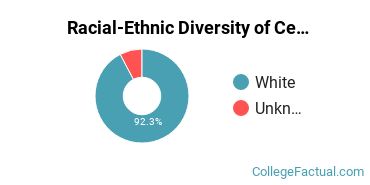
None of the graduate students at Central Christian College of the Bible belong to a racial-ethnic minority group*. For more details on graduate school diversity at the school, check out the chart below. If you click on it, you'll be taken to a page with more details.
Central Christian College of the Bible Graduate School Cost of Attendance
$4,950Avg Tuition & Fees (In-State)
The average tuition per credit hour for part-time graduate students at Central Christian College of the Bible is $275. There is no discount for in-state students.
The average graduate full-time tuition and fees is shown in the table below.
In-State
Out-of-State
Tuition
$4,950
$4,950
Location of Central Christian College of the Bible Graduate School
Central Christian College of the Bible is a private not-for-profit institution located in Moberly, Missouri. The location of Central Christian College of the Bible is a good match for students who are interested in living in a college town while they pursue their degree.
*The racial-ethnic minorities count is calculated by taking the total number of students and subtracting white students, international students, and students whose race/ethnicity was unknown. This number is then divided by the total number of students at the school to obtain the racial-ethnic minorities percentage.
 by our College Data Analytics Team